
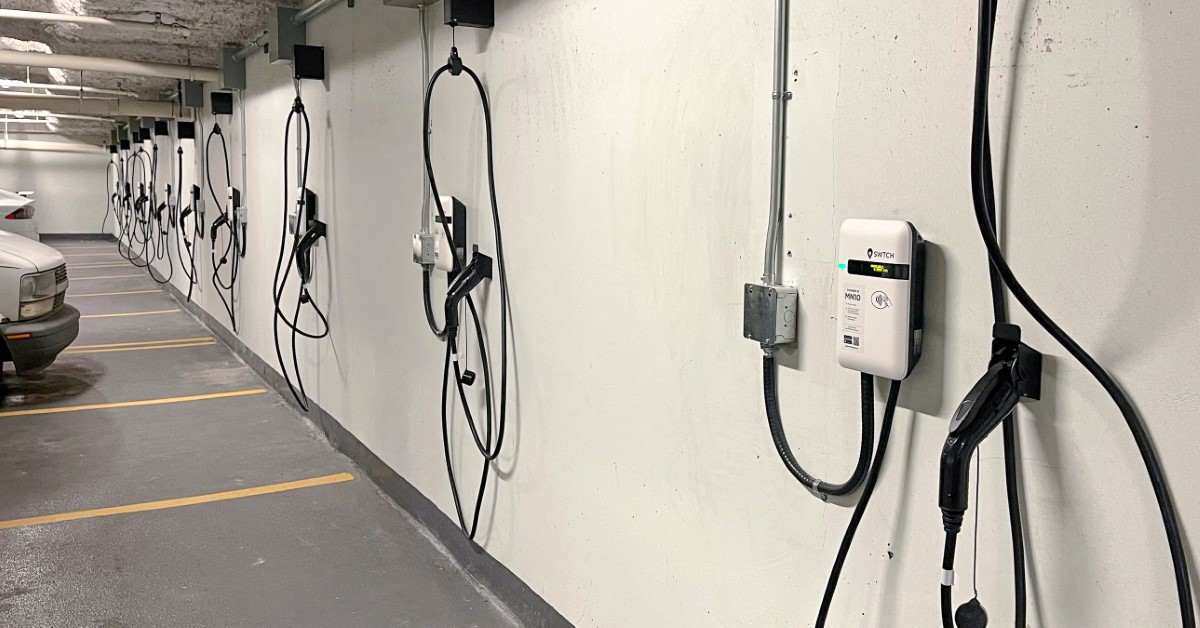
Electric vehicles are no longer a niche concern for residential properties. Residents are buying them, prospective tenants are asking about charging, and buyers in condo communities increasingly treat it as a basic amenity. For owners and HOA boards, the question has shifted from “should we offer charging?” to “how do we do it without creating new headaches?”
This guide covers the main obstacles in multifamily charging and how properties can work through them.
Why Multifamily Is Harder Than a Single-Family Home
A homeowner with a garage can install a charger and be done. Shared properties face a different set of problems:
- Shared electrical capacity. Panels and service lines are sized for a building’s existing load, not for a row of vehicles charging overnight.
- Unclear ownership. Parking spaces may be assigned, deeded, first-come or a mix, which complicates who gets which charger.
- Billing. Someone has to measure usage fairly and collect payment without turning the property manager into a utility.
- Governance. HOAs and boards need to approve projects, and members are wary of cost overruns or open-ended obligations.
Each of these is solvable, but they are the reasons so many buildings stall at the “we should look into this” stage.
Start With the Electrical Reality
Before any decision on hardware, a property needs to understand what its electrical system can support. A qualified assessment reviews panel capacity, distance from the electrical room to parking areas, and the layout of garages or lots.
Many owners assume that adding chargers means expensive panel upgrades or rewiring. Dynamic load balancing changes that calculation. It distributes available power among chargers in real time, which can allow more chargers to operate on existing electrical capacity and reduce the need for major upgrades. For older buildings, that difference can decide whether a project is feasible at all.
Solving the Cost Question
Upfront cost is the most common reason boards say no. Conventional projects require the property to pay for equipment, permitting, installation and sometimes utility work, then recover that money slowly through resident fees.
An alternative is the turnkey model, in which a provider installs, owns and operates the chargers at no upfront cost to the property and handles hardware, permitting, software, maintenance and daily operations. Terms differ between providers, so boards should confirm exactly what is covered, how revenue is shared if at all, and what happens at the end of the agreement. Get these details in writing before voting.
Choosing Equipment That Fits Residential Parking
Most residents park for many hours, often overnight, so Level 2 charging is typically the right match. It is slower than DC fast charging but more than adequate for vehicles that sit for eight to twelve hours, and it costs less to install and run. Dual-port units can serve two parking spaces from one installation, which can lower per-space costs in garages where spots are close together.
Fast chargers have their place at retail and fleet sites, but for residents’ daily needs, reliable Level 2 access is usually what matters.
Access Control and Fair Billing
Shared chargers need rules. Software should let the property authorize specific users, assign chargers to particular parking spaces, and monitor performance and revenue. That keeps non-residents from using chargers and prevents disputes over who parked where.
Billing deserves equal attention. Usage-based billing means residents pay for what they use, and automatic statements keep building staff out of the collections business. When billing runs without management involvement, the property gains an amenity without gaining a workload.
A Practical Resource for Boards and Owners
If you are weighing options, it helps to see what a full-service approach looks like in practice. ev charging for apartments from Ampaway covers HOA-managed condos, apartment buildings with shared garages, gated complexes and new construction. Under this model the provider handles installation, permitting, software, maintenance and resident support, and installations are performed by EVITP-certified installers to code. For a volunteer board that doesn’t want to manage a technical project, shifting that operational burden is often the deciding factor.
Don’t Overlook Incentives
Rebates and incentives can offset project costs, but they vary by state, utility and program year. Some programs, including certain ones in California, may apply to multifamily installations. Check current eligibility with your utility and state energy agency, and ask any provider whether they help with applications.
Getting Board and Resident Buy-In
Projects succeed when stakeholders understand the benefits early. A few steps help:
- Survey residents. Measure current EV ownership and likely demand over the next few years.
- Frame the amenity. Charging supports property values and helps attract and retain tenants who drive electric.
- Address cost concerns directly. Explain who pays for what, and show that residents who charge pay for their own usage.
- Plan for growth. Choose a design that adds chargers as demand rises instead of requiring a rebuild.
- Clarify responsibility. Residents should know who to contact when a charger needs service, and it shouldn’t be the front desk.
Questions to Ask Any Provider
Before signing, ask:
- Who owns the equipment, and who is responsible for maintenance and repairs?
- What does the property pay now, and are there any ongoing fees?
- How is revenue handled, and what are the terms?
- Does the system support load management on our existing electrical service?
- Are the chargers built on open standards so we aren’t locked into one network?
- How do residents get support?
The Bottom Line
Offering charging in a multifamily property no longer has to mean a large capital outlay or a new management burden. With a proper electrical assessment, load management, the right Level 2 equipment, clear access rules and automated billing, even older buildings can provide dependable charging. Start with a survey and a site assessment, ask hard questions about cost and responsibility, and choose a partner who takes on the operational work so your community can simply enjoy the benefit.