Les poils de chien ne se répartissent pas uniformément sur un parquet. Certains restent visibles au milieu de la pièce, tandis que d’autres s’accumulent le long des plinthes, se glissent dans les joints entre les lames ou se coincent autour des pieds de meubles. Ces différences semblent mineures, mais elles peuvent déterminer si un nettoyage automatisé donne réellement un résultat satisfaisant. Un robot peut traverser plusieurs fois une surface sans retirer complètement les poils qui se trouvent dans les zones difficiles d’accès. Pour comprendre cette limite, il faut regarder au-delà de la puissance d’aspiration et examiner la manière dont les brosses interagissent avec la géométrie du sol.
Un robot pour nettoyage sol doit coordonner plusieurs mouvements pour récupérer efficacement les poils : les brosses latérales dirigent les débris vers la zone d’aspiration, la brosse principale soulève les particules retenues contre la surface et le flux d’air les transporte vers le bac à poussière. Chaque élément intervient à une étape différente. Si les brosses latérales repoussent les poils dans un coin ou si le rouleau principal passe trop loin d’un joint, une partie des saletés peut rester sur place malgré un cycle de nettoyage complet. La conception mécanique joue donc un rôle essentiel dans les performances observées au quotidien.
Cette question devient particulièrement importante dans les maisons où un chien perd beaucoup de poils et où le parquet comporte des rainures, des chanfreins ou des joints légèrement creusés. La disposition des meubles ajoute une autre difficulté, car les espaces étroits limitent les angles d’approche du robot. Le résultat dépend alors de la longueur des poils, de leur adhérence au sol, de la profondeur des interstices et de la capacité de l’appareil à suivre les contours de la pièce. Comprendre ces interactions permet de choisir un équipement plus adapté et d’organiser le nettoyage de manière à réduire les accumulations récurrentes.
Why Brush Geometry Matters More Than a Single Suction Rating
Brush geometry determines how a robot interacts with debris before the airflow carries it into the dustbin. A cylindrical roller with appropriately arranged bristles can agitate loose fur and direct it toward the suction opening, while a poorly matched design may allow lightweight strands to slide across the floor. The diameter of the roller, the spacing between bristles and the shape of the contact area all influence how effectively it reaches particles lying close to the surface. These characteristics become especially relevant when dog hair collects in narrow parquet seams, where the debris is not always positioned directly in the path of the main roller.
Suction power remains important, but it cannot compensate for every mechanical limitation. If a brush fails to lift fur from a shallow groove, increasing the airflow may not completely solve the problem. Similarly, a roller that collects hair efficiently from the centre of a room may perform differently near furniture legs, where its contact with the floor changes as the robot adjusts its direction. Buyers should therefore evaluate brush design alongside suction performance, cleaning-path coverage and maintenance requirements. The most useful specification is not necessarily the highest number on a product page, but the combination of features that suits the surfaces and debris found in the home.
How Parquet Seams Change the Way Pet Hair Moves
Parquet flooring contains small changes in elevation that affect how loose material travels across the surface. Hair lying on a smooth board may move readily when exposed to a passing brush, whereas strands caught inside a recessed joint can remain undisturbed. The depth and width of the seam influence whether a roller can reach the material or whether the vacuum relies mainly on airflow to extract it. Some strands also become trapped when dust, skin flakes and fine particles collect around them, creating a compact mixture that is more difficult to remove than loose hair alone.
The direction of the cleaning pass can influence the result as well. When a robot approaches a joint from one angle, its brush may guide the hair along the groove rather than lift it out. A perpendicular pass may interact with the same debris differently, depending on the brush arrangement and the joint profile. This does not mean that every robot requires a specialised parquet pattern, but it explains why repeated movement across a room does not guarantee that all embedded debris will disappear. Periodically inspecting the seams, particularly in areas where a dog sleeps or rests, helps reveal whether the cleaning routine is working effectively.
The Role of Side Brushes Around Furniture Legs and Room Corners
Side brushes are designed to collect debris beyond the main roller’s direct path. Their rotating arms sweep material inward, allowing the robot to clean closer to walls and furniture than its central suction opening could manage alone. However, the same movement can sometimes push lightweight dog hair into a corner or spread it along a furniture base if the brush encounters the debris at an unfavourable angle. The length, flexibility and rotation speed of the side brushes all influence how the material moves, although the actual result also depends on floor friction and the shape of the surrounding space.
Furniture legs create an additional geometric challenge because the robot must change direction repeatedly while maintaining coverage. Hair can accumulate behind chair legs, beneath narrow tables and along the edges of cabinets where the main roller rarely passes directly over it. A robot with effective edge-following navigation can reduce these missed areas, but physical clearance remains important. Before purchasing a model, it is worth measuring the height of low furniture and identifying narrow gaps where the robot might struggle. Keeping cables and loose objects out of these spaces also helps the side brushes operate without interruptions or unnecessary tangling.
Selecting a Brush System for Homes With Long-Haired Dogs
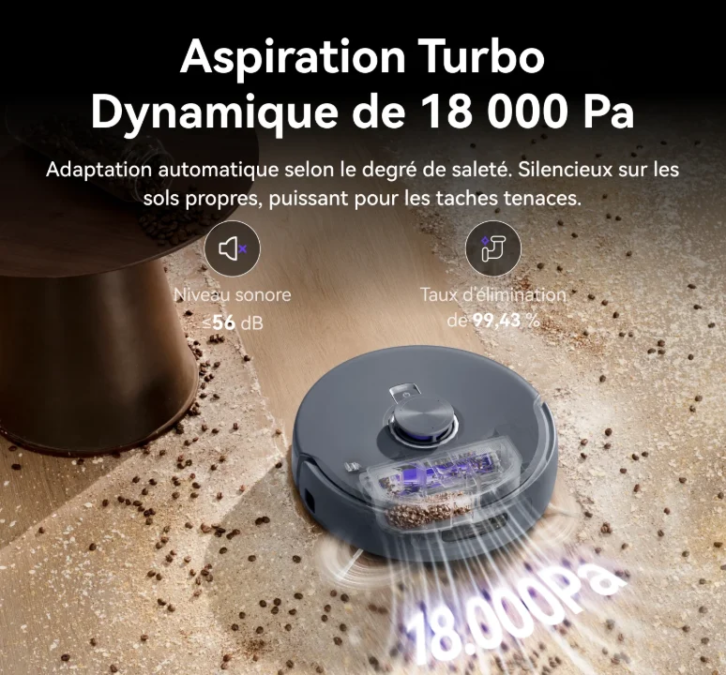
Long dog hair presents a different mechanical problem from short, fine fur. Longer strands are more likely to wrap around cylindrical rollers, particularly when they become entangled with human hair or textile fibres. Once a bundle forms around the roller ends, it can restrict rotation and make cleaning less efficient. Brush systems designed to reduce tangling may use alternative roller profiles, specialised materials or arrangements that guide hair toward the suction inlet. These designs can reduce maintenance, although their effectiveness varies according to hair length, quantity and the surfaces being cleaned.
For households comparing an aspirateur robot pour poil de chien, the ease of removing and cleaning the main roller deserves as much attention as the advertised anti-tangle technology. A brush that can be detached without complicated tools makes it easier to remove trapped strands before they accumulate. Replacement availability matters too, because bristles and flexible components can deteriorate with continued use. Checking the manufacturer’s maintenance instructions and compatible spare parts before buying can help prevent a seemingly convenient device from becoming difficult or expensive to maintain later.
Why Cleaning Frequency Influences Hair Accumulation in Floor Joints
A robot’s mechanical design is only one part of the cleaning process. The interval between cleaning cycles determines how much fur accumulates before the next pass. When a dog sheds heavily, several days of hair can collect in the same parquet seams and along the same furniture edges. These concentrations are more difficult to manage than a thin layer of freshly deposited fur because loose hair may become mixed with dust, crumbs and particles brought in from outside. More frequent cleaning can prevent some of this buildup and reduce the need for intensive manual work.
A practical schedule should reflect the dog’s shedding pattern and the areas it uses most often. The space around a sleeping mat, the route between the entrance and the living room, and the area surrounding feeding bowls may require more attention than a guest room used occasionally. Dividing the home into cleaning zones can make this approach more efficient, particularly when the robot supports room selection or scheduled runs. During periods of heavier shedding, additional cycles may be helpful, while less frequently used areas can follow a lighter schedule. The objective is to collect hair before it becomes concentrated in difficult-to-reach places.
How Floor Protection and Brush Maintenance Work Together
Parquet requires careful maintenance because its finish and construction determine how it responds to repeated contact and moisture. A robot’s brushes should be kept free of compacted debris that might interfere with smooth movement across the floor. Worn, damaged or heavily contaminated components should be inspected according to the manufacturer’s recommendations. Although ordinary dust and loose hair are generally manageable, trapped grit can act as an abrasive when repeatedly dragged across a finished surface. Keeping the floor reasonably clear of larger particles therefore supports both cleaning performance and the long-term appearance of the wood.
Maintenance should also include the wheels, sensors and underside of the robot. Dust around the wheels can affect movement, while dirty sensors may interfere with navigation and edge detection. The dustbin and filter need attention as well, since restricted airflow can reduce the effectiveness of the entire collection system. For parquet owners, the safest approach is to use only cleaning solutions and mop settings approved for the particular floor finish, if the robot includes a washing function. Excess moisture should be avoided on wood flooring, especially where the manufacturer advises against wet cleaning.
Conclusion
Effective pet hair collection depends on how a robot interacts with the physical structure of a home, not simply on how much suction power it advertises. Parquet seams, furniture legs and narrow corners each create different obstacles, requiring the brush system to guide hair toward the intake without repeatedly scattering it. Roller shape, side-brush positioning and reliable navigation all contribute to more consistent coverage.
For households with dogs, the most suitable robot is one that matches the flooring, handles the animal’s coat type and remains easy to maintain. Combining an appropriate brush design with regular cleaning cycles and basic floor care can reduce the amount of hair left behind in hidden areas. This practical approach helps preserve the appearance of parquet while making everyday cleaning more manageable.
Frequently Asked Questions
Can a robot vacuum remove dog hair from parquet joints?
It can collect loose hair from many shallow joints, but the result depends on the depth of the seams, the brush design and the strength of the airflow. Hair that has become compacted with dust may require an occasional manual pass.
Are rubber rollers better than bristle brushes for dog hair?
Rubber rollers can be easier to clean and may reduce hair wrapping in some situations. Bristle brushes can also collect debris effectively, depending on their design. The best choice depends on the dog’s coat, the floor type and the manufacturer’s cleaning performance claims.
Why does dog hair remain around furniture legs after cleaning?
The main roller may not pass directly over these areas, while side brushes can sometimes move lightweight strands into narrow spaces. Effective edge-following navigation and an appropriate cleaning schedule can reduce the problem, although some corners may still need occasional manual attention.
How often should a robot vacuum run in a home with a shedding dog?
There is no universal schedule. Homes with heavy shedding or several pets may benefit from daily cleaning, while homes with less shedding may need fewer cycles. The frequency should reflect the amount of hair, foot traffic and visible accumulation.
Does a higher suction rating guarantee better pet hair removal?
No. Suction is only one factor. Brush geometry, airflow design, floor contact, navigation and the ability to prevent hair tangles all influence the final result. Evaluating these features together provides a more realistic basis for comparison.